
High-quality early childhood education like Head Start is a powerful means of preparing children for school and life success, free of the pitfalls of juvenile delinquency and crime.
By Subject: Child Welfare | Early Childhood Education | Home Visiting | K-12 Education | Maternal and Child Health | Prenatal-to-Age-Three
High-quality early childhood education like Head Start is a powerful means of preparing children for school and life success, free of the pitfalls of juvenile delinquency and crime.

Pennsylvania’s comprehensive early care and education system spans the formative years of a child, birth-to-age-5, and provides an opportunity to ensure our youngest citizens are starting out on the right track. This report takes a deeper look into the complexities within
Pennsylvania’s child care and pre-k system and makes recommendations on improvements that are necessary to ensure the system functions equitably and increases access and affordability for all families in the commonwealth.
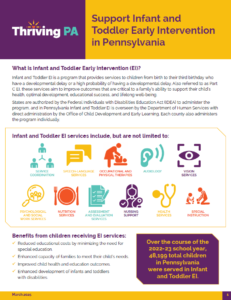
Infant and Toddler EI is a program that provides services to children from birth to their third birthday who have a developmental delay or a high probability of having a developmental delay. Also referred to as Part C EI, these services aim to improve outcomes that are critical to a family’s ability to support their child’s health, optimal development, educational success, and lifelong well-being.
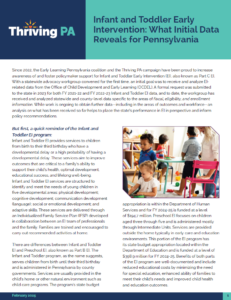
Since 2022, the Early Learning Pennsylvania coalition and the Thriving PA campaign have been proud to increase awareness of and foster policymaker support for Infant and Toddler Early Intervention (EI), also known as Part C EI. With a statewide advocacy workgroup convened for the first time, an initial goal was to receive and analyze EI related data from the Office of Child Development and Early Learning (OCDEL). A formal request was submitted to the state in 2023 for both FY 2021-22 and FY 2022-23 Infant and Toddler EI data, and to date, the workgroup has received and analyzed statewide and county-level data specific to the areas of fiscal, eligibility, and enrollment information.
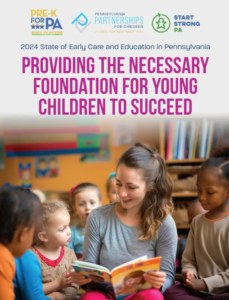
Pennsylvania’s comprehensive early care and education system spans the formative years of a child, birth-to-age-5, and provides an opportunity to ensure our youngest citizens are starting out on the right track. The report shows more investments in the early care and education workforce are needed to give Pennsylvania children the foundation they need to succeed.


PAP4Children Follow 10,177 2,481
Pennsylvania Partnerships for Children is dedicated to improving the well-being of PA's 2.6 million kids. We're independent, non-partisan and non-profit.
💙 Today is National Child Health Day!
Every child deserves a healthy start and the opportunity to thrive. That means access to quality health care, perinatal health services, health coverage, immunizations, early intervention, behavioral health supports and the resources
October is National Children’s Health Month! 💙
Every child deserves a healthy start and the opportunity to thrive. That means access to perinatal health care, health coverage, vaccinations, early intervention and the resources families need from the very beginning.
💙 As Kinship Care Month comes to a close, we’re highlighting why kinship care matters.
📊 Research is clear: when children can’t stay with their parents, they do best with kin.
Kinship families can provide stability, cultural identity, resilient mental health & behavioral
🎓 Every student’s path after high school looks different. Career and technical education gives Pennsylvania students opportunities to explore their interests, build skills and prepare for the future.
We’re encouraged by continued investment in CTE and support for efforts to
The “right path” is different for every kid.
That’s why we’re investing in career and technical education — like the culinary arts and the trades here in Pennsylvania. Our latest state budget increases funding for these initiatives by another $10 million, so more kids can pursue