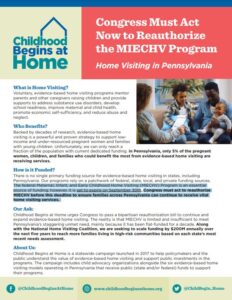
The Maternal, Infant, and Early Childhood Home Visiting (MIECHV) program strengthens communities by improving outcomes for children and their families. A cornerstone of evidence-based public policy, MIECHV provides funds for developing and implementing voluntary, evidence-based home visiting programs. Programs must meet at least four of six evidence-based benchmarks to satisfy the law’s rigorous requirements for demonstrated effectiveness. MIECHV is an essential source of funding; however, it is set to expire on September 30th. Congress must act to reauthorize MIECHV before this deadline to ensure families across Pennsylvania can continue to receive vital home visiting services.
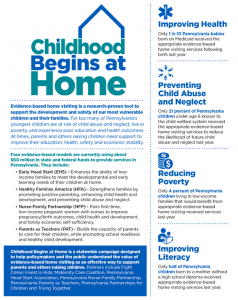
Evidence-based home visiting programs recognize parents are children’s first teachers, but sometimes even parents and others raising children look for help. Far too many of Pennsylvania’s youngest children live in poverty and experience poor education and health outcomes. Voluntary home visiting programs help parents and others raising children with the supports necessary to improve health, safety, literacy and family self-sufficiency. During home visits, nurses or other trained professionals visit with women, families and children – some as early as pregnancy to promote positive birth outcomes – to provide parent education and support, ultimately promoting child health, well-being, learning and development.
A nurturing childhood leads to a strong, productive adult who will contribute great things to our society. But let’s face it, raising children is challenging and difficult even in the best situations. Home visiting programs recognize parents are children’s first teachers, but sometimes even parents need help. Childhood Begins at Home is a statewide campaign to help policymakers and the public understand the value of and support public investments in evidence-based home visiting.


PAP4Children Follow 10,177 2,481
Pennsylvania Partnerships for Children is dedicated to improving the well-being of PA's 2.6 million kids. We're independent, non-partisan and non-profit.
💙 Today is National Child Health Day!
Every child deserves a healthy start and the opportunity to thrive. That means access to quality health care, perinatal health services, health coverage, immunizations, early intervention, behavioral health supports and the resources
October is National Children’s Health Month! 💙
Every child deserves a healthy start and the opportunity to thrive. That means access to perinatal health care, health coverage, vaccinations, early intervention and the resources families need from the very beginning.
💙 As Kinship Care Month comes to a close, we’re highlighting why kinship care matters.
📊 Research is clear: when children can’t stay with their parents, they do best with kin.
Kinship families can provide stability, cultural identity, resilient mental health & behavioral
🎓 Every student’s path after high school looks different. Career and technical education gives Pennsylvania students opportunities to explore their interests, build skills and prepare for the future.
We’re encouraged by continued investment in CTE and support for efforts to
The “right path” is different for every kid.
That’s why we’re investing in career and technical education — like the culinary arts and the trades here in Pennsylvania. Our latest state budget increases funding for these initiatives by another $10 million, so more kids can pursue