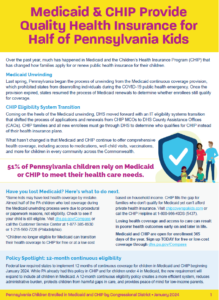
Over the past year, much has happened in Medicaid and the Children’s Health Insurance Program (CHIP) that has changed how families apply for or renew public health insurance for their children. The three fact sheets in this series show enrollment by Congressional, state House, and state Senate districts.
The 2022 State of Children’s Health Report shows the factors that contribute to a child’s likelihood of being uninsured include family income, race and ethnicity, geography, and age. It uses the most recent Census data and examines the role of public health insurance programs as comprehensive coverage options and how Medicaid continues to provide a safety net of coverage during the COVID-19 public health emergency.
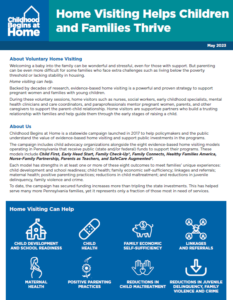
The Childhood Begins at Home campaign released new fact sheets that show the number of young children and their families receiving publicly funded, evidence-based home visiting services statewide and in each county. While a historic level of increased funding in last year’s state budget helped serve more Pennsylvania low-income families—moving from 5% to 7% served—it still represents only a fraction of those most in need of services.
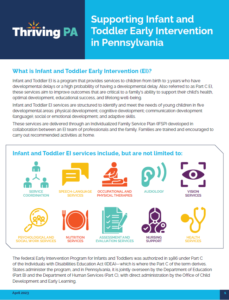
Infant and Toddler EI services are structured to identify and meet the needs of young children in five developmental areas: physical development; cognitive development; communication development(language); social or emotional development; and adaptive skills. Infant and Toddler EI depends on state funding support to ensure that every child needing services is referred to and receiving them.
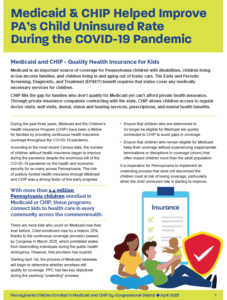
During the past three years, Medicaid and the Children’s Health Insurance Program (CHIP) have been a lifeline for families by providing continuous health insurance coverage throughout the COVID-19 pandemic. With more than 1.4 million Pennsylvania children enrolled in Medicaid or CHIP, these programs connect kids to health care in every community across the commonwealth.

PAP4Children Follow 10,177 2,481
Pennsylvania Partnerships for Children is dedicated to improving the well-being of PA's 2.6 million kids. We're independent, non-partisan and non-profit.
💙 Today is National Child Health Day!
Every child deserves a healthy start and the opportunity to thrive. That means access to quality health care, perinatal health services, health coverage, immunizations, early intervention, behavioral health supports and the resources
October is National Children’s Health Month! 💙
Every child deserves a healthy start and the opportunity to thrive. That means access to perinatal health care, health coverage, vaccinations, early intervention and the resources families need from the very beginning.
💙 As Kinship Care Month comes to a close, we’re highlighting why kinship care matters.
📊 Research is clear: when children can’t stay with their parents, they do best with kin.
Kinship families can provide stability, cultural identity, resilient mental health & behavioral
🎓 Every student’s path after high school looks different. Career and technical education gives Pennsylvania students opportunities to explore their interests, build skills and prepare for the future.
We’re encouraged by continued investment in CTE and support for efforts to
The “right path” is different for every kid.
That’s why we’re investing in career and technical education — like the culinary arts and the trades here in Pennsylvania. Our latest state budget increases funding for these initiatives by another $10 million, so more kids can pursue